

Kessel

ONE WAR, TWO PEOPLE, TWO TREATMENTS

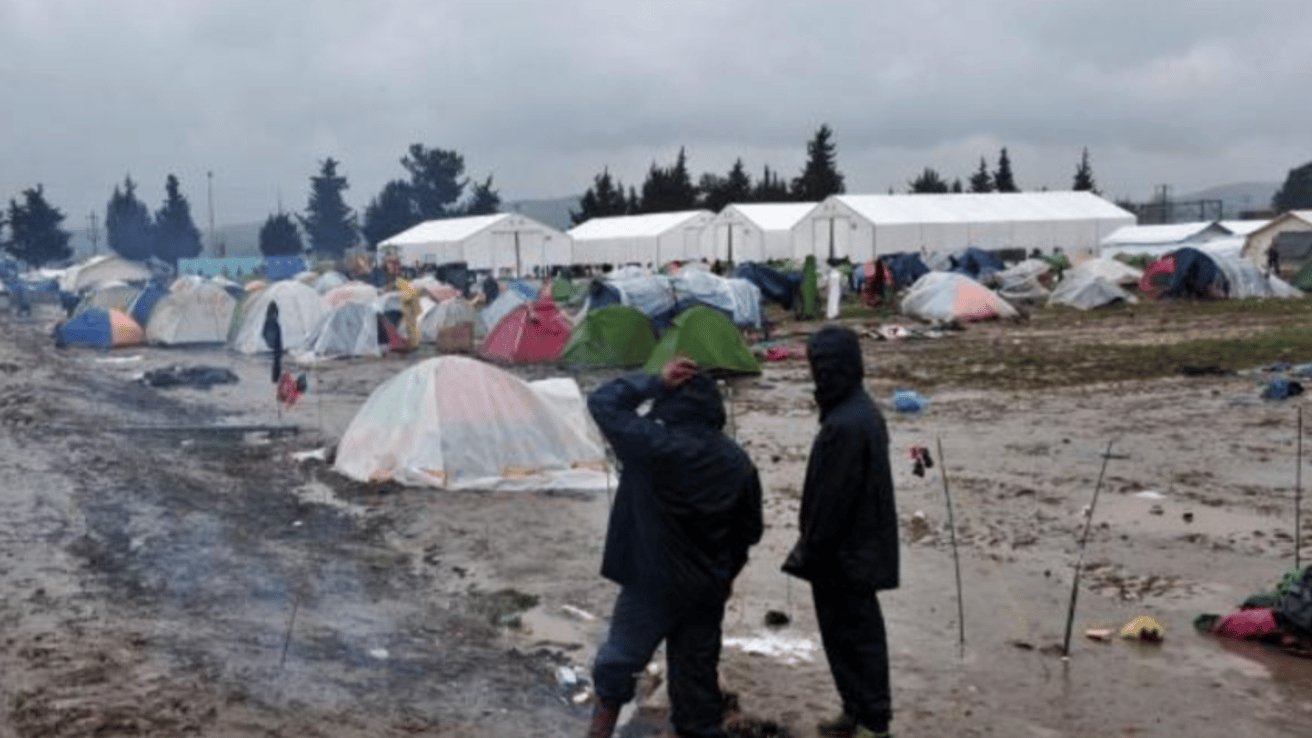
Since the beginning of the war in Ukraine in 2022, Ukrainian migration has been daily depicted by the European media. Martha even said that it seems to be “the most documented war in the whole history of all wars”. The media must have forgotten that Russians also face the arbitrary decisions of their President, leaving them no choice but to flee.

MINERVIEWS
3 min ⋅ 01/02/2023

The way we talk, or more accurately, we do not talk about Russian migrants reflects another reality: the lack of help dedicated to them. We met a Russian migrant who decided to come to France in 2020 for her studies. Part of the reasons why she left was she did not agree with the political choices made in Russia. When the war began, the way she was treated here has partially changed. She was even told: “you better not say your nationality for now on, it’s just for your own safety”. That means that there is no juridical status guaranteeing her security. In her opinion, if Ukrainians and Russians are perceived differently it is “because of the two different positions that they have in this war: one is the aggressor and the other one is protecting their lands”. These differences of treatment show the unequal migration policies present in Europe. In fact, European countries treat migrants according to the country where they come from, and not according to the reason why they escape from it.

Even if they are not portrayed as much as Ukrainians are in the media, Russian people fleeing their country share the same motivation. At least 200 000 of them chose to escape rather than remain silent. In fact, Russia does not allow its citizen to speak about the conflict. Or, as our Russian interviewee told us: “we cannot call it a war, or we risk 3 years of imprisonment”. Because Russian migrants lack media representation, Europeans find it difficult to understand why they chose to escape.

Russian migrants mostly belong to the middle class, are highly educated and are young. Because their political opposition was impossible to express and above all impossible to assume due to repression, they left. But this anti-war movement is not so united in exile, and suffers from major differences existing between opponents. In a perfect future, Russian migrants would like to make their homeland more democratic, based on what they experienced abroad. However, they truly fear their trip back.

So how does it work in Europe when you are a Russian refugee? First difficulty is finding information via official government websites. They all highlight measures for Ukrainian people, leaving Russians out. To be even more precise, we met a student who worked in a French prefecture: she told us how it really works from the inside. The department she worked for was in charge of crises. To get the displaced person status, a piece of Ukrainian identification was needed. So Russian escaping the same war, and being “displaced people” too, were not eligible to get it. As she told us, she had the impression that they knew about the situation of Russian migrants but since they did not know how to deal with them, they did not prepare any specific provisions for them, as no one thought Russians would flee too.

The unique type of help Russians can find is online on a website called Map of Peace, which allows them to find exiled anti-war Russian communities. The website also offers the possibility to give money to Russians depending on the country they are in. This shows that unless the civil society acts, Russians are not actually helped by governments.

It is clear that the way European countries treat Russian immigrants is radically opposed to the warm welcome reserved for Ukrainian ones. This could be explained by the way Russians are considered by other European people. In fact, them being seen as aggressors, because living in the country that started this war, keeps them from being helped. Russians are not seen as victims of this conflict, so they are not seen as legitimate to be welcomed as so. They do not feel safe concerning the future of their country, as our Russian interviewee told us: “the worst is yet to come”.

by Pauline Royer and Justine Eyraud


If you want to know more about this issue and have a french point of view, click here !

To go further, on our February file dedicated to the first anniversary of the war in Ukraine, you can read our Society and Culture sections' articles on our blog.

Follow MINERVIEWS

MINERVIEWS

Par MINERVIEWS

Minerwiews t'informe sur l'Europe ! Nous sommes étudiant.e.s en sciences humaines et sociales et avons comme sujet de préoccupation de comprendre les enjeux contemporains présents en Europe et d’interpeller sur ces sujets. Hispanophones, italophones, germanophones, anglophones et plus encore, notre groupe est un ensemble multilingue ! C’est pourquoi nous avons choisi.es de conserver cette diversité dans nos articles. Chaque mois, tu découvriras de nouvelles thématiques via différentes approches.

Les derniers articles publiés

MATEO CABETE, ETUDIANT EN MOBILITE INTERNATIONALE AU CANADA

par MINERVIEWS   ⋅  08/07/2026 2 min

Mateo Cabete vient d’être diplômé d’une licence bidisciplinaire droit et histoire de l’art à l’université Lumière Lyon 2. Pour conclure ses trois années en beauté, il s’est envolé vers le Canada, à Sherbrooke, le temps d’un échange universitaire.

CONSTANCE: SA VIE MULTICULTURELLE ENTRE LONDRES, LYON ET PARIS

par MINERVIEWS   ⋅  01/07/2026 5 min

Etudiante, Constance a grandi à Londres avec deux parents français à la croisée de plusieurs culturelles. Cette franco-britannique se confie sur son rapport à son identité, son chez-soi et au voyage.

LE VINTAGE FACE À LA FAST-FASHION : UNE RÉSISTANCE À L'UNIFORMISATION ?

par MINERVIEWS   ⋅  01/06/2026 1 min

Depuis quelques années, le vintage connaît un succès grandissant, notamment auprès des jeunes. Souvent présenté comme une alternative plus éthique à la fast-fashion, il semble également répondre à un besoin d'originalité dans une mode de plus en plus standardisée. Est-ce une véritable forme de résistance ou une nouvelle tendance comme une autre ?

LES INFLUENCEURS, LA FAST-FASHION ET L'EUROPE : QUI FIXE LES RÈGLES ?

par MINERVIEWS   ⋅  01/06/2026 3 min

En Europe, il existe de grandes divergences quand il s'agit d'encadrer les influenceurs et leur rôle dans la promotion de la fast-fashion. Le cadre européen semble insuffisant face à une surconsommation mondialisée.

FAST-FASHION ET PETIT COLIS : "TAX THE POOR" ?

par MINERVIEWS   ⋅  01/06/2026 1 min

Le gouvernement français a mis en place une taxe sur les petits colis le 1er mars pour limiter l’importation de produits bas de gamme. En attendant la génération de la taxation à l’échelle européenne le 1er juillet, la fast-fashion transite par le Benelux et le porte-monnaie des consommateurs français est, pour l’instant, préservé.

LA FRAGILISATION DES IDENTITÉS CULTURELLES À TRAVERS LE MODÈLE DE LA FAST-FASHION

par MINERVIEWS   ⋅  01/06/2026 1 min

Le vêtement semble être un moyen d’exprimer son identité. Aujourd’hui, beaucoup de vêtements sont le symbole d’un héritage culturel, et permettent de s’identifier à une communauté. Cette idée est pourtant remise en question par la tendance de la fast-fashion, qui transforme les vêtements en un simple produit de consommation.

LA FAST-FASHION : UNE MODE QUI CONSUME L'ENVIRONNEMENT ET LA SANTÉ

par MINERVIEWS   ⋅  01/06/2026 2 min

Présente depuis les années 2000, la fast-fashion n’est pas une nouveauté. Depuis plus d’une dizaine d'années, ses conséquences environnementales et sociétales sont étudiées et persistent pourtant (1). Pire, les réseaux sociaux sont devenus le vecteur d’une nouvelle culture ultra-consumériste promue par la fast-fashion.

FAST FASHION ET (SUR)CONSOMMATION CULTURELLE : MÊMES MÉCANISMES ?

par MINERVIEWS   ⋅  01/06/2026 2 min

Souvent pointée du doigt, à raison, la fast fashion est aujourd'hui décrié dans la société. C'est maintenant la consommation culturelle qui présente des caractéristiques du « toujours plus » et d'esthétisation.

L’IMMIGRATION : PREMIÈRE CAUSE D’EUROSCEPTICISME ?

par MINERVIEWS   ⋅  01/05/2026 2 min

L’euroscepticisme a toujours été un sentiment présent en Europe. C’est pour cela que le traité de Lisbonne a mis en place à son article 50, le retrait d’un Etat membre de l’UE. Processus qui a été utilisé par le Royaume-Uni, en janvier 2020. Ce souhait qui désormais inspire d’autres nations a été motivé par des crises économiques et migratoires.

L’EUROVISION, UNE RÉPONSE À LA MONTÉE DE L’EUROSCEPTICISME ?

par MINERVIEWS   ⋅  01/05/2026 1 min

Le 16 mai prochain se déroulera, comme tous les ans, la 70e édition du Concours Eurovision de la Chanson. Cette scène immense est l’occasion de célébrer l'unité continentale face à un euroscepticisme qui, comme l’illustre parfaitement le récent Brexit, ne cesse de s'étendre et de prendre de la place dans le débat public.